


Advanced Surge Protection for Industrial Communication Devices 

Advanced Surge Protection for Industrial Communication Devices
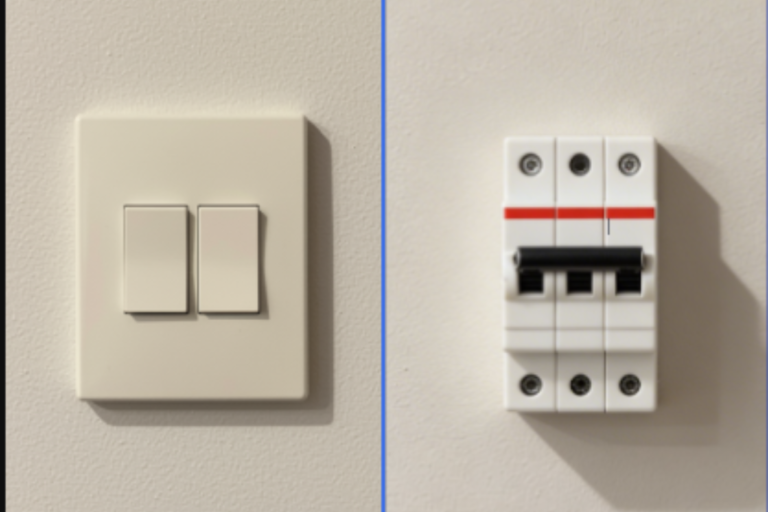
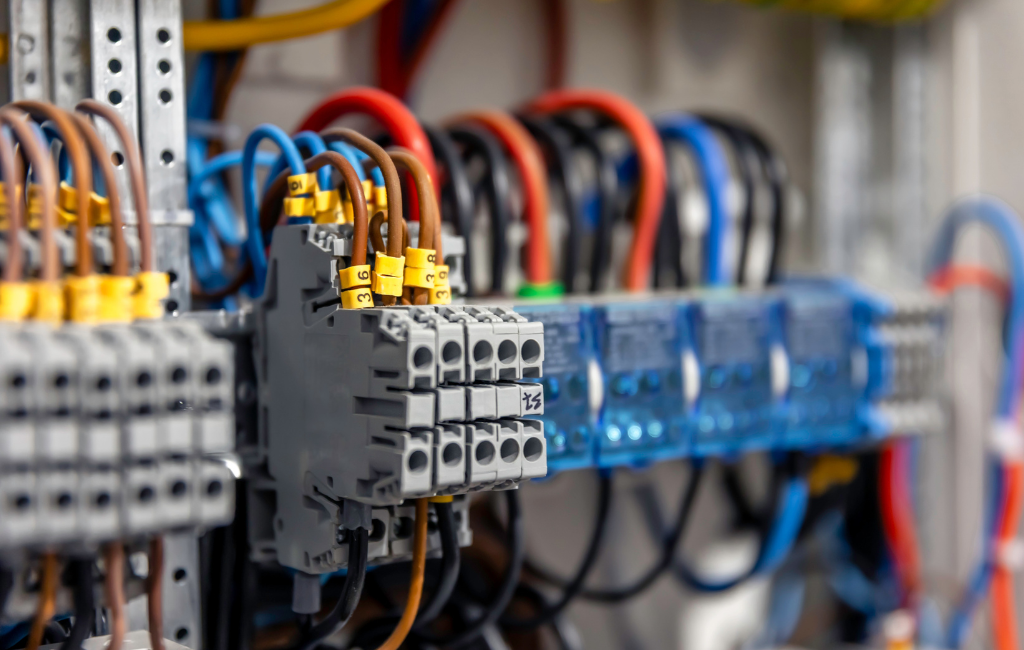
The Communications devices in industrial environments are faced with very demanding electrical conditions. Voltage spikes, lightning strikes, switching surges, and electromagnetic interference could all have serious impacts on vulnerable networking equipment. Industrial communication devices such as Ethernet switches, routers, gateways, and controllers are particularly susceptible to these threats because they usually connect over long cable runs and outdoor installations. 

Advanced surge protection is more than a desirable feature; it is an essential requirement for long-term reliability and network stability. 

Understanding Electrical Surges in Industrial Environments:  

Electrical surges are sudden increases in voltage that are conducted by power lines or even communication cables. In various industries, electrical surges may result from operations of heavy machinery, load switching, as well as instances of grounding faults. Although electrical surges may have a short duration, such effects may eventually damage the devices over time.  

The industrial communication equipment is exposed to the risk of damage due to surges as it is usually located in control panels, substations, roadside cabinets, and remote sites. The equipment may malfunction or even need replacement due to lack of proper surge protection. 

Why Surge Protection Is Important for Communication Devices? 

The unlike traditional networking devices found in regular offices, industrial communication devices are required to always be operational in an electrically noisy environment. Stopping the communication process can cause production processes to be completely halted.  

Which is better, advanced surge protection or device resiliency?  

Advanced protection improves device resiliency by directing surplus voltage away from the circuit where it might do the most damage. It provides stability for communication links while guarding against unexpected shutdowns.  

Some key risks mitigated by surge protection include; 

  • Lightning-Induced Voltage 

  • Power line switching surges  

  • Ground Potential Differences  

  • Electromagnetic Interference from Heavy Equipment. 

Various Types of Surge Protection within Industrial Devise; 

The new industrial communication equipment features multiple levels of surge protection on both its electric supply lines as well as data lines. This surge protection complies with international industrial standards related to electromagnetic compatibility.  

The common protection areas are; 

Power Input Surge Protection. 

Ethernet port surge suppression. 

Serial Communication & Multi-mode (RS232 / RS485) Line. 

Advanced versions may include additional protection devices such as Transient voltage suppression diodes, Gas discharge devices, as well as Isolation transformers. 

Surge Protection for Ethernet Networks: 

The ethernet interfaces installed in industrial environments can normally be subjected to long cable runs that may act as antennas for lightning strikes. Ideally, there are surge protectors incorporated into industrial-grade Ethernet switches and routers for each Ethernet interface to protect against voltage spikes damaging internal circuitry.  

In mission-critical applications, additional external surge protection devices may be provided to add to system integrity, especially in outdoor applications or substations. 

Integration to Grounding and Shielding Practices: 

Although the surge protection included is important, it must be augmented through appropriate grounding and shielding practices. Good grounding ensures surge energy is safely conducted away from the equipment. Shielded cables and effective panel layouts help further reduce electromagnetic disturbances.  

Surge protection is most effective when combined with;  

  • Proper earthing systems  

  • Shielded twisted-pair or Fiber optic cables  

  • Segregation of power and communication wiring  

  • It improves network reliability by great margins when a holistic approach is considered. 

Benefits of Advanced Surge Protection: 

Advanced surge protection pays off operationally and financially, with reduced equipment failure rates, lower maintenance costs, and higher system uptime.  

Long-term benefits of this include; 

  • Prolonged device lifetime  

  • Reduced downtime and service interruptions  

  • Improved safety and continuity of operations  

For utilities, TransportationOil & Gas, and Manufacturing Industries among others, these benefits directly translate into improved productivity and lower total cost of ownership. 

Conclusion: 

Advanced surge protection is a critical design element for industrial communication devices operating in demanding electrical environments.  

By safeguarding power and data interfaces from voltage spikes and transient disturbances, surge protection ensures reliable communication and long-term equipment durability. 

In mission-critical industrial networks, surge protection is not merely an added feature it is a foundational requirement for building resilient and future-ready communication infrastructure. 

Thanking You.! 

 

Read More

 Redundant Power Design in Industrial Switches for Mission-Critical Reliability 

Redundant Power Design in Industrial Switches for Mission-Critical Reliability

For an industrial setup, not only does downtime of the network need to be avoided, but it can also cause losses. Ethernet switches for industrial use act as the nervous system of an automated setup, and their performance directly relates to the entire system. Among the most important features in an Ethernet switch for ensuring its performance is the support of power redundancy.  

The redundant power ensures these switches function within industrial settings even in case of a power failure. This becomes crucial in mission-critical applications where un-interruptible communication is paramount. 

Why Power Redundancy is Important for Power Network?  

Such industrial networks usually operate in an environment where there are power changes, voltage drop-offs, and even disconnections. Clearly, the industrial networks are not like the networks used in offices, whose main purpose is to run applications like email services. An industrial network is expected to handle the needs of real-time control applications, SCADA applications, remote monitoring, and even safety applications.  

However; the risk of this is minimized using a redundant power design, which allows the switch to use two separate power sources. If the primary source fails, the switch can still function with the secondary input. 

How Redundant Power Design Works; 

Usually, industrial switches have dual terminals designed for power inputs. These terminals can be connected to individual DC supplies as well as different power supplies. The circuitry constantly monitors the inputs and changes to the active source in case of failure of one source.  

The key characteristics of a redundant power system are; 

  • Dual DC power inputs  
  • Wide voltage input range  
  • Automatic Failover Without Reboot  
  • Alarm relay output for power failure notifications  

This design ensures that there are consistent communications on the network despite any power issues. 

How, the redundant power design works usually, industrial switches have dual terminals designed for power inputs. These terminals benefit in Mission-Critical Applications Redundant power support is critical in systems and applications wherein availability is paramount.  

For instance, the utility, Oil & Gas, and Transportation sectors, as well as the manufacturing industries, depend on uninterrupted data exchange between their control centres and field devices. The benefits achieved from a redundant power system design comprise improved availabilityreduced operational risks, and improved system resiliency. 

 It further includes a facility for maintenance flexibility, where one power source can be serviced without taking down the switch. 

Integration with Industrial Safety and Monitoring Systems: 

Industrial switches currently incorporate redundancy in power supply alongside monitoring components. Alarm relays can alert users as soon as there is a failure in any of the input powers. Such timely alert systems prevent failures and troubles in industrial systems. 

In an industrial network of larger scale, the concept of redundant power design would complement other mechanisms for resilience, which exist in the form of link redundancy and ring topology protocols. 

Design Considerations for Implementation: 

In the making redundant power arrangements in industrial networks, it is essential to make sure that both powers are truly independent inputs. Connecting both inputs to the same source of power is not beneficial in redundancy. 

Environmental conditions, load requirements, and other backup power equipment such as UPS devices are additional factors to be taken into consideration during design.  

Adequate planning will guarantee that redundancy achieves its reliability advantage. 

Redundant Power Supply vs Standard Power Supply; 

The standard commercial switch would use just one power adapter. The device would shut down immediately if the power adapter fails or does not receive power.  

The industrial switch on the other hand is designed for continued continuity in power.  

Even though there may be additional costs involved in providing redundant support for the power supply, the primary advantage is the significant reduction in the occurrence of downtimes. 

Conclusion: 

The Redundant power design is a foundational feature of industrial Ethernet switches built for mission-critical reliability by supporting dual power inputs and automatic failover, industrial switches ensure continuous network operation even in the event of power disruptions. 

In environments where uptime directly impacts safety, productivity, & operational efficiency, investing in redundant power design is not optional—it is essential for building a resilient and future-ready industrial network infrastructure. 

Thanking You.! 

Read More

Understanding the Real Difference Between Industrial and Normal Switches 

Understanding the Real Difference Between Industrial and Normal Switches

The Ethernet switches are core elements of modern networking, but they are not intended for use in all conditions. Commercial (or office-type) ethernet switches are the types most often found in IT environments, while industrial ethernet switches are made to function in higher demand production environments. When designing networks that must be reliable, secure, and operate over long periods, it is essential to distinguish between these two types of switches. Both types perform the same basic functionality of forwarding ethernet traffic from one end (source) to the other (destination), but their different design philosophies, capabilities, and applications all differ by a wide margin. 

Purpose and Design Philosophy: 

Standard Ethernet switches are designed for office, home, and data centre environments, with an emphasis on high performance, data quality, and cost efficiency. This assumes that there will be a stable supply of electricity, moderate temperatures, and low levels of electrical interference. In contrast to standard switches, industrial switches are designed and rigorously tested to operate reliably across a wide range of environmental conditions. They are designed for continuous use under extreme temperature conditions, helping to protect against temperature shock, vibration, dust, moisture, and electromagnetic noise–all of which are common in factories, substations, transportation systems, as well as outdoor locations.  

IES & Mechanical Differences the construction of the two types of switches is one of the most obvious differences between the two. Industrial switches are made with heavy-duty, rugged metal enclosures and all components used in constructing the switch are of industrial-grade quality, ensuring extreme durability and long life.  

Key Differences in Environmental Options; 

  •  Temperature: Engineered for stable performance in wide temperature environments. 

  • Resistance: to shock, vibration, and electromagnetic radiation is very high compared to normal switches.  

  • Mounting Options: Options available are typically DIN-rail or panel-mounted for industrial switches.  

  • Enclosure: Standard switches typically use plastic enclosures and are limited to controlled environmental conditions 

Considerations Regarding Power and Reliability: 

Industry mandates high availability from their systems; thus, the results of any downtime will adversely affect production or safety. Industrial Ethernet switches place a priority on reliability, often employing power redundancy and alarms. Standard switches typically rely on a single power source with no built-in redundancy, making them susceptible to power surges or outages. 

Network Features and Protocols Supported: 

Although standard and industrial switches share core switching functions, industrial models integrate advanced features to support deterministic communication and fast fault recovery in control system environments. 

Examples of some of these protocols would be; 

  • Redundant protocols such as MRP, RSTP or ERPS. 

  • Quality of Service (QoS) features to give priority to control traffic. 

  • VLANs, as well as security features for industrial applications. 

Normal switches are focused on standard IT networking features and may not provide industrial redundancy or real-time traffic capabilities. 

Installation and Maintenance of Industrial Switches: 

The industrial switches are designed for easy installation in control panels and field enclosures, offering compact form factors, multiple mounting options, and terminal-based power connectors for seamless integration into industrial systems. 

Maintenance is easier due to long product life cycles, stable firmware support, and remote management capabilities. In general, conventional switches require more frequent replacement and are unsuitable for prolonged operation in industrial environments. 

Conclusion: 

The real difference between industrial and normal switches lies in their ability to perform reliably under challenging conditions. While normal switches are adequate for standard IT environments, industrial Ethernet switches are purpose-built to deliver durability, stability, and deterministic performance in demanding industrial applications. 

Choosing the right type of switch is not just a technical decision—it is a strategic one that directly impacts network reliability, safety, and operational efficiency. 

Thanking You.! 

Read More

 Understanding LLDP in Industrial Switches: Enhancing Network Visibility and Control 

Understanding LLDP in Industrial Switches: Enhancing Network Visibility and Control

The IEEE 802.1ab standard defines LLDP (Link Layer Discovery Protocol) as a vendor-neutral Layer 2 discovery protocol that allows network devices—including industrial switches, PLCs, and gateways-to advertise their identity, capabilities, and connection details to directly connected devices.  

Devices can learn about each other automatically, through an exchange of LLDP information, without the need for manual configuration. This is particularly useful in industrial applications, where equipment frequently changes due to additions, replacements, or relocations. 

 With the ongoing growth of the size and complexity of industrial networks, it’s becoming more important to maintain good visibility (awareness of what is connected) into your connected devices.  

Working principle of LLDP in Industrial Ethernet Networks; 

The LLDP periodically transmits small units of data called LLDP Data Units (LLDPDUs) to neighbouring devices that contain structured information about the way devices are interconnected. Information is typically shared about the following; 

Typical information shared through LLDP includes; 

  • The name and description of devices 

  • The port identification and interface characteristics of devices 

  • The devices’ management IP addresses 

  • The devices’ capabilities and operational status 

This information is stored in the LLDP table of the switch and can be viewed via management interfaces such as network management software or web GUI. 

Importance of LLDP in Industrial Switches; 

The industrial ethernet networks typically integrate a wide range of devices—including controllers, sensors, HMIs, cameras, and remote I/O modules. Without automatic discovery, tracking physical connections can be time-consuming and labour-intensive.  LLDP greatly minimizes this difficulty by providing real-time information about the topology of the network. 

The ability to enable LLDP through industrial switches, enables operators to easily discover connected devices and confirm the relationship between each port on the switch and its corresponding device, as well as detect any configuration mismatches. This can increase overall reliability and reduce the amount of time needed for troubleshooting during routine maintenance or faulty conditions. 

Key Benefits of LLDP in Industrial Environments: 

LLDP delivers several operational advantages that are particularly valuable in industrial settings: 

  • Improved network visibility and topology awareness 

  • Faster commissioning and device replacement 

  • Simplified troubleshooting and fault isolation 

These benefits are especially important in environments where network documentation may not always reflect real-time conditions. 

LLDP & Network Control: 

The industrial managed switches are including LLDP into their network monitoring and management platforms, providing centralized management capability. Remote visibility of LLDP data allows network administrators to efficiently assess device interconnections without on-site inspection. 

In large networks, LLDP data can also be used to automate asset inventory and documentation, ensuring accurate records of connected devices and their placement within the overall network topology. 

Conclusion: 

The LLDP protocol is an effective way to improve both visibility and control over an industrial Ethernet network. The auto-discovery of devices and knowledge of the network topology make configuring your network easier, reducing errors, providing faster troubleshooting results, and ultimately will help to keep your network running consistently. As the world of industrial networks grows and develops, LLDP continues to be an essential part of managed industrial Ethernet switches, enabling both effective operations and place for continued growth in the future. 

Thanking You.! 

Read More

Boosting Bandwidth and Reliability with Industrial Ethernet Switch Link Aggregation  

Boosting Bandwidth and Reliability with Industrial Ethernet Switch Link Aggregation

As industrial networks continue to handle growing volumes of real-time data, the need for higher bandwidth and seamless communication has become critical With the advent of modern automation systems, SCADA systems, and industrial IoT applications, there is an increasing reliance on Ethernet networks for uninterrupted data communications between devices, controllers and system Under these circumstances, link aggregation has come to be viewed as a highly effective means of improving network performance as well as reliability in industrial Ethernet networks. 

The redundant power ensures these switches function within industrial settings even in case of a power failure. This becomes crucial in mission-critical applications where un-interruptible communication is paramount. 

Why Power Redundancy is Important for Power Network?  

Such industrial networks usually operate in an environment where there are power changes, voltage drop-offs, and even disconnections. Clearly, the industrial networks are not like the networks used in offices, whose main purpose is to run applications like email services. An industrial network is expected to handle the needs of real-time control applications, SCADA applications, remote monitoring, and even safety applications.  

However; the risk of this is minimized using a redundant power design, which allows the switch to use two separate power sources. If the primary source fails, the switch can still function with the secondary input. 

How Redundant Power Design Works; 

Usually, industrial switches have dual terminals designed for power inputs. These terminals can be connected to individual DC supplies as well as different power supplies. The circuitry constantly monitors the inputs and changes to the active source in case of failure of one source.  

The key characteristics of a redundant power system are; 

  • Dual DC power inputs  
  • Wide voltage input range  
  • Automatic Failover Without Reboot  
  • Alarm relay output for power failure notifications  

This design ensures that there are consistent communications on the network despite any power issues. 

How, the redundant power design works usually, industrial switches have dual terminals designed for power inputs. These terminals benefit in Mission-Critical Applications Redundant power support is critical in systems and applications wherein availability is paramount.  

For instance, the utility, Oil & Gas, and Transportation sectors, as well as the manufacturing industries, depend on uninterrupted data exchange between their control centres and field devices. The benefits achieved from a redundant power system design comprise improved availabilityreduced operational risks, and improved system resiliency. 

 It further includes a facility for maintenance flexibility, where one power source can be serviced without taking down the switch. 

Integration with Industrial Safety and Monitoring Systems: 

Industrial switches currently incorporate redundancy in power supply alongside monitoring components. Alarm relays can alert users as soon as there is a failure in any of the input powers. Such timely alert systems prevent failures and troubles in industrial systems. 

In an industrial network of larger scale, the concept of redundant power design would complement other mechanisms for resilience, which exist in the form of link redundancy and ring topology protocols. 

Design Considerations for Implementation: 

In the making redundant power arrangements in industrial networks, it is essential to make sure that both powers are truly independent inputs. Connecting both inputs to the same source of power is not beneficial in redundancy. 

Environmental conditions, load requirements, and other backup power equipment such as UPS devices are additional factors to be taken into consideration during design.  

Adequate planning will guarantee that redundancy achieves its reliability advantage. 

Redundant Power Supply vs Standard Power Supply; 

The standard commercial switch would use just one power adapter. The device would shut down immediately if the power adapter fails or does not receive power.  

The industrial switch on the other hand is designed for continued continuity in power.  

Even though there may be additional costs involved in providing redundant support for the power supply, the primary advantage is the significant reduction in the occurrence of downtimes. 

Conclusion: 

The Redundant power design is a foundational feature of industrial Ethernet switches built for mission-critical reliability by supporting dual power inputs and automatic failover, industrial switches ensure continuous network operation even in the event of power disruptions. 

In environments where uptime directly impacts safety, productivity, & operational efficiency, investing in redundant power design is not optional—it is essential for building a resilient and future-ready industrial network infrastructure. 

Thanking You.! 

Read More

Architecture, Ports, and Connections of Industrial Ethernet switches 

Architecture, Ports, and Connections of Industrial Ethernet switches

Industrial Ethernet switches provide the structural foundation for modern industrial communication networks. Industrial Ethernet switches allow for reliable real-time communication among controllers, sensors and supervisory systems across tough environments. Industrial Ethernet switches different from commercial switches because designed to operate reliably in harsh environments while delivering deterministic and reliable network performance. 

To build a reliable and scalable network, it is critical to understand the architecture, ports, and connectivity options used by the industrial Ethernet switch. 

Industrial Ethernet Switch Architecture: 

The architecture of an industrial Ethernet switch is developed for consistency in operation, low latency rate, and very high reliability in performance. The basic operation of an industrial Ethernet switch includes the forwarding of Ethernet frames based on MAC addresses and IP addresses with minimum packet loss as a Layer 2 or Layer 3 network. 

Key Architectural Elements; 

  • Switching Fabric: Core component of the industrial Ethernet switch used for high-speed data forwarding rate with minimal latency. 

  • Control Processor: This manages the operation of the network using network protocols. 

  • Memory (RAM & Flash): it used to store firmware, routing tables and network configurations. 

  • Power Management Unit: This section supports a huge voltage input and provide redundancy. 

  • Industrial Enclosure: Designed as per the industrial environments with immunity to Soak, Dust, Vibration, Surge and EMI. 

Types of Ports Used by Industrial Ethernet Switch: 

The Industrial grade Ethernet switches maximize the use of different port types for communication within different distances, speeds, and tough environments. The port type of an industrial Ethernet switch plays a critical role in determining network performance. 

Types of Ports; 

  • Ethernet Ports (RJ45); 

These ports are built to support copper-based Ethernet connectivity, the designed port supports 10/100/1000 Mbps connectivity for short to medium-length cables. 

  • Fiber Optic Ports (SFP); 

Fiber optic ports support long communications and ensure protection against electromagnetic interference, which makes them the best option for high-interference environments. 

  • Combo Ports; 

These ports offer functional advantages of having the capability to support Fiber and copper connectivity on the same port for the multi-purpose industrial application. 

  • Serial Ports; 

These ports provide connectivity for setup and access to the network for management purposes. 

Industrial Ethernet Switch Connections: 

Basically, this connection is used for an industrial network to support reliability, redundancy, and deterministic connectivity.  

Industrial switches support different network topologies based on application requirements. 

Connection Topologies; 

  • Star Topology: 

This is the connection point of network which gives easy network management. 

  • Ring Topology: 

This type of connection ensures reliable network performance by using MRP, RSTP, or ERPS protocols for network uptime. 

  • Line chain or Daisy Chain Topology: 

This connection is used for machine-level networks, where the devices are connected in sequence. 

  • Mesh Topology: 

This type of connection is used for large networks in applications requiring multiple redundant paths. 

Power and Redundancy Connections: 

Power reliability is a key aspect of an industrial network. Industrial Ethernet switches provide the advantage of redundant power inputs for network uptime. 

Power Connection Features: 

  • Redundant DC power inputs for network uptime. 

  • Wide input voltage range. 

  • Reverse polarity and overload protection. 

  • Alarm relays for power failure indication. 

Network Monitoring and Control Connections: 

Industrial managed switches offer comprehensive network monitoring and control functions which ensure network uptime and provide easy network troubleshooting. 

Management Interfaces; 

  • Web-based Graphical User Interface. 

  • Command Line Interface. 

  • SNMP network monitoring. 

  • Remote network management via VPN or other protocols. 

Environmental and Mechanical: 

Industrial Ethernet switches are engineered to operate reliably in harsh operating environments in addition, their physical construction supports long-term durability and industrial-grade specifications. 

  • Key Industrial Design Features 

  • DIN rail or panel mounting 

  • Operating temperature range 

  • High levels of EMC and ESD immunity 

  • Metal construction 

Conclusion: 

The architecture, port count, and connectivity of an industrial Ethernet switch have a major influence on the reliability and efficiency of industrial communication networks. By choosing the appropriate switch architecture, port count, and network topology, organizations can create robust networks to support industrial automation, IoT, and other critical operations. 

Thanking You.! 

The redundant power ensures these switches function within industrial settings even in case of a power failure. This becomes crucial in mission-critical applications where un-interruptible communication is paramount. 

Why Power Redundancy is Important for Power Network?  

Such industrial networks usually operate in an environment where there are power changes, voltage drop-offs, and even disconnections. Clearly, the industrial networks are not like the networks used in offices, whose main purpose is to run applications like email services. An industrial network is expected to handle the needs of real-time control applications, SCADA applications, remote monitoring, and even safety applications.  

However; the risk of this is minimized using a redundant power design, which allows the switch to use two separate power sources. If the primary source fails, the switch can still function with the secondary input. 

How Redundant Power Design Works; 

Usually, industrial switches have dual terminals designed for power inputs. These terminals can be connected to individual DC supplies as well as different power supplies. The circuitry constantly monitors the inputs and changes to the active source in case of failure of one source.  

The key characteristics of a redundant power system are; 

  • Dual DC power inputs  
  • Wide voltage input range  
  • Automatic Failover Without Reboot  
  • Alarm relay output for power failure notifications  

This design ensures that there are consistent communications on the network despite any power issues. 

How, the redundant power design works usually, industrial switches have dual terminals designed for power inputs. These terminals benefit in Mission-Critical Applications Redundant power support is critical in systems and applications wherein availability is paramount.  

For instance, the utility, Oil & Gas, and Transportation sectors, as well as the manufacturing industries, depend on uninterrupted data exchange between their control centres and field devices. The benefits achieved from a redundant power system design comprise improved availabilityreduced operational risks, and improved system resiliency. 

 It further includes a facility for maintenance flexibility, where one power source can be serviced without taking down the switch. 

Integration with Industrial Safety and Monitoring Systems: 

Industrial switches currently incorporate redundancy in power supply alongside monitoring components. Alarm relays can alert users as soon as there is a failure in any of the input powers. Such timely alert systems prevent failures and troubles in industrial systems. 

In an industrial network of larger scale, the concept of redundant power design would complement other mechanisms for resilience, which exist in the form of link redundancy and ring topology protocols. 

Design Considerations for Implementation: 

In the making redundant power arrangements in industrial networks, it is essential to make sure that both powers are truly independent inputs. Connecting both inputs to the same source of power is not beneficial in redundancy. 

Environmental conditions, load requirements, and other backup power equipment such as UPS devices are additional factors to be taken into consideration during design.  

Adequate planning will guarantee that redundancy achieves its reliability advantage. 

Redundant Power Supply vs Standard Power Supply; 

The standard commercial switch would use just one power adapter. The device would shut down immediately if the power adapter fails or does not receive power.  

The industrial switch on the other hand is designed for continued continuity in power.  

Even though there may be additional costs involved in providing redundant support for the power supply, the primary advantage is the significant reduction in the occurrence of downtimes. 

Conclusion: 

The Redundant power design is a foundational feature of industrial Ethernet switches built for mission-critical reliability by supporting dual power inputs and automatic failover, industrial switches ensure continuous network operation even in the event of power disruptions. 

In environments where uptime directly impacts safety, productivity, & operational efficiency, investing in redundant power design is not optional—it is essential for building a resilient and future-ready industrial network infrastructure. 

Thanking You.! 

Read More

Connectivity Solution Fits You Best: SIM, Router, or VAN? 

Connectivity Solution Fits You Best: SIM, Router, or VAN?

In an increasingly connected environment, the choice of connectivity plays a key role in ensuring performance, reliability, and scalability. Whether you are connecting IoT devices, connecting machines, or connecting enterprise networks, the shortlist of options always includes the following: SIM-based connectivity, Routers, or VAN (Value-Added Network) services. 

Both options serve distinct purposes and are suited to specific use cases. Understanding their differences is essential to selecting the most appropriate solution. 

SIM-Based Connectivity; 

The SIM-based connectivity represents the most basic and straightforward form of cellular communication. It is a method of connectivity that allows a particular device to connect to a mobile network with the help of a SIM card. It is widely used in IoT sensors, smart meters, GPS tracking devices, and similar applications. 

SIM-based connectivity is best used in those applications where data usage is low, and there is no control required. While it offers flexibility, it lacks centralized control, advanced security, and traffic management capabilities. 

Router-Based Connectivity; 

A router essentially acts as an intermediary between the cellular network and the devices that are connected.  A cellular or LTE router connects to the network using a SIM card and then distributes connectivity via Ethernet, Wi-Fi, or serial interfaces. 

This type of connectivity is well suited for applications requiring shared access, local network management, and enhanced security. Routers offer connectivity features such as firewalls, VPN support, failover connectivity, and remote management. 

VAN (Value-Added Network) Connectivity; 

A VAN is a type of managed connectivity service that offers more advanced capabilities than basic SIM- or router-based connectivity. It is a combination of platforms, cloud services, security, routing, and analytics. 

VAN is used to manage large-scale deployments. It is used in nationwide IoT deployments, smart cities, utilities, fleet management, etc.  

The VAN is deployed in mission-critical applications where high reliability is essential. 

Key differences briefly: 

Feature / Aspect  SIM Connectivity  Router Connectivity  VAN Connectivity 
Primary Purpose  Connect a single device  Share connectivity across devices  Managed, end-to-end connectivity 
Hardware Required  SIM-enabled device  LTE/5G router + SIM  SIM + Router + Cloud Platform 
Scalability  Limited  Medium  High 
Network Management  Minimal  Local management  Centralized monitoring & control 
Security Features  Basic (network-level)  Firewall, VPN, NAT  Advanced security & policy control 
Data Visibility  Device-level  Network-level  Full analytics & reporting 
Best For  Sensors, trackers, meters  Industrial networks, CCTV, IoT gateways  Large IoT & enterprise deployments 
Deployment Complexity  Low  Medium  High 
Cost Structure  Low initial cost  Medium  Higher but optimized at scale 

Which One Is Best for You? 

The answer to this question depends on the scale of your application, control requirements, and long-term growth prospects. 

SIM-based connectivity is ideal for connecting individual devices that have low data requirements and require a simple, cost-effective solution. 

Router-based connectivity is the best choice when you are looking for shared access, security, and control of your network. 

VAN-based connectivity is best suited for large-scale applications requiring advanced security and efficient management. 

Conclusion: 

As you have seen above, the answer to the question of which type of connectivity is the best is clearly defined.  

The three types of connectivity, namely SIM, Router, and VAN, are used to perform different functions in the communication network. The choice of the best option is critical to the performance and efficiency of the network. 

 By selecting the best option according to your current requirements and prospects, you can create a network that is both stable and scalable. 

Thanking You.! 

Read More

IoT technologies working principle in manufacturing operations 

IoT technologies working principle in manufacturing operations

The Internet of Things (IoT) has brought substantial change to the manufacturing sector by providing an emerging opportunity for companies to connect their machines, systems, host & user and processes with each other by leveraging a network of sensors and continuous real-time, end to end process data. The connections provided by IoT allow manufacturing companies to increase efficiency, lower down time, increase product quality and provide better decision-making capabilities throughout the production process. 

Smart Monitoring and Real Time Visibility: 

The Sensors and smart meters that using IoT can be placed on all types of machinery used in manufacturing so that sensors will send real time data to the manufacturer including but not limited to temperature, vibration, pressure and energy usage. 

 Manufacturers use real-time data to track shop floor activity and monitor production performance. In addition, manufacturers can view current machine performance via a single, central dashboard to quickly respond to potential problems or issues on the shop floor. 

Predictive Maintenance: 

Another one of the main benefits of utilizing IoT within the manufacturing sector is predictive maintenance. Using data from sensors and smart meters, predictive maintenance determines when equipment is likely to fail and provides advance notification. This provides the manufacturer the ability to plan for maintenance to take place at a time that is best for them and prevent costly unplanned downtime, which increases overall maintenance cost and decreases the lifespan of the equipment being maintained. 

Key benefits include; 

  • Early fault detection 

  • Reduced breakdowns 

  • Optimized maintenance planning 

Better Production Performance through IoT: 

Real-time monitoring of production allows IoT to identify and address production process inefficiencies, operational bottlenecks, and deviations in production conditions or products. In addition, it is possible to alert manufacturers automatically to act (to optimize) operations; to generate improvements in throughput; and to reduce waste throughout the production process. 

Improved Quality Control & Process Optimization: 

An IoT-enabled quality system delivers continuous, real-time monitoring of production and product quality, enabling instant corrective action when deviations arise. The result is that product quality remains consistent; the number of defective products is reduced; and therefore rework/returns are minimized. 

Better Supply Chain & Inventory Visibility with IoT: 

In addition to better production performance, IoT enhances supply chain visibility across raw materials, components, and finished goods throughout the entire manufacturing and logistics lifecycle. Furthermore, IoT smart inventory systems enable optimal inventory levels to be maintained to avoid both inventory shortages and overstocking. 

IoT enables manufacturers to continuously track and control energy usage at the machine and facility level. Manufacturers will be able to decrease power usage, improve how energy-intensive processes are performed, and assist in achieving a sustainable operation while decreasing operational cost. 

Conclusion: 

IoT is a key driver of Industry 4.0, enabling smarter, more connected, and more efficient manufacturing operations. By leveraging real-time datapredictive analytics, and automation, manufacturers can improve productivity, quality, and competitiveness in an increasingly digital industrial landscape. 

Thanking You.! 

Read More

 Role of Routers in LTE Network Access 

Role of Routers in LTE Network Access

As always-on connectivity becomes essential across industrial, remote, and mobile environments, LTE stands out as a dependable wireless communication technology. This often leads to a common technical question; The Role of Routers in LTE Network Access?  

The answer depends entirely on the router’s design and internal hardware capabilities. 

A router cannot receive LTE signals unless it is specifically designed for cellular communication. While the term “router” is often used generically, not all routers are equipped to interact with mobile networks. Understanding this distinction is essential when designing reliable network architectures. 

What Is an LTE Router? 

The LTE router is a specialized networking device that integrates a cellular modem within the router it-self. This enables the device to connect directly to LTE networks via a SIM card, eliminating the need for external modems or wired infrastructure. 

Once connected to the LTE network, the router converts cellular data into standard IP traffic and distributes it to connected devices through Ethernet ports or Wi-Fi. Users experience the same performance and reliability as traditional broadband, with the flexibility of wireless access 

Key characteristics of LTE routers include; 

  • Built-in LTE modem and SIM slot. 

  • Support for external or high-gain antennas. 

  • LAN and/or Wi-Fi connectivity for downstream devices. 

How LTE Connectivity Works? 

LTE is a 4G cellular broadband technology that provides high-speed data transmission over network, licensed radio spectrum through cellular GSM towers in the mobile communication. Unlike wired internet connections, LTE relies on radio frequency signal communication and SIM-based authentication to establish network access B/W tensimeter to receiver. 

The LTE connectivity requires dedicated cellular hardware such as an SIM, LTE modem, GSM antenna interfaces, and carrier-compatible firmware. Without these components, a router simply cannot detect or decode LTE signals. 

How an LTE Router Establishes a Connection? 

When powered on, an LTE router scans for available cellular networks within range. Upon identifying a compatible network, it authenticates using the inserted SIM card and establishes a secure data session with the service provider. Once connected, the router manages routing, security, and traffic handling in the same manner as a conventional router. 

This process enables reliable connectivity even in locations where wired infrastructure is unavailable, difficult to deploy, or too costly. 

Application of LTE Routers Are Commonly Used; 

The LTE routers are widely adopted across industries that require dependable communication beyond traditional network boundaries. They are particularly valuable in environments that require mobility, rapid deployment, or remote access in the remote areas. 

Typical applications include; 

  • Industrial automation and remote monitoring 

  • IoT gateways and telemetry systems 

  • Surveillance and security networks 

  • Utilities, oil & gas, and mining operations 

  • Temporary sites and backup WAN connectivity 

Benefits of Using LTE Routers: 

One of the key advantages of LTE routers is their ability to deliver internet connectivity without dependence on physical cabling. This significantly reduces deployment time and increases flexibility. LTE routers also support business continuity by serving as primary or backup connections, ensuring minimal downtime.  

Additionally, modern LTE routers often include advanced features such as VPN support, firewall protection, and remote device management, making them suitable for enterprise and industrial use cases. 

Conclusion: 

The Role of Routers in LTE Network Access, Standard routers lack the required hardware to interact with LTE networks and must rely on external devices for cellular access. LTE routers bridge this gap by combining routing functionality with integrated cellular technology. 

As organizations continue to expand into remote operations, industrial automation, and IoT deployments, LTE routers remain a practical, reliable, and scalable solution for wireless network connectivity. 

Thanking You.! 

Read More

SAN TELEQUIP

Over the last three decades, SAN Telequip has evolved from process control and security surveillance solutions to advanced VPN Routers, Managed Industrial Ethernet Switches, and IIoT Gateways etc. Today, we serve diverse sectors including Building Automation, Oil & Gas, Telecom, Power & Energy, Renewables, Metro & Rail, ATMS/TMS, Data Centers, Mining, Healthcare, Infrastructure, and Industrial Automation. We design and manufacture rugged, high-reliability devices that connect systems, processes, and people in mission-critical environments. Driven by strong in-house R&D, we are advancing in Edge Computing, Secure Industrial Networking, TSN, Cybersecurity, 5G Technology and Cloud Connectivity – delivering future-ready solutions for next-generation infrastructure and Industrial Networks.

Phone

Location

Deron Heights, Office No.504 & 505, 5th Floor,
S. No. 270/1/23, Baner Road,
Opp. Mahabaleshwar Hotel, Baner, Pune – 411045